

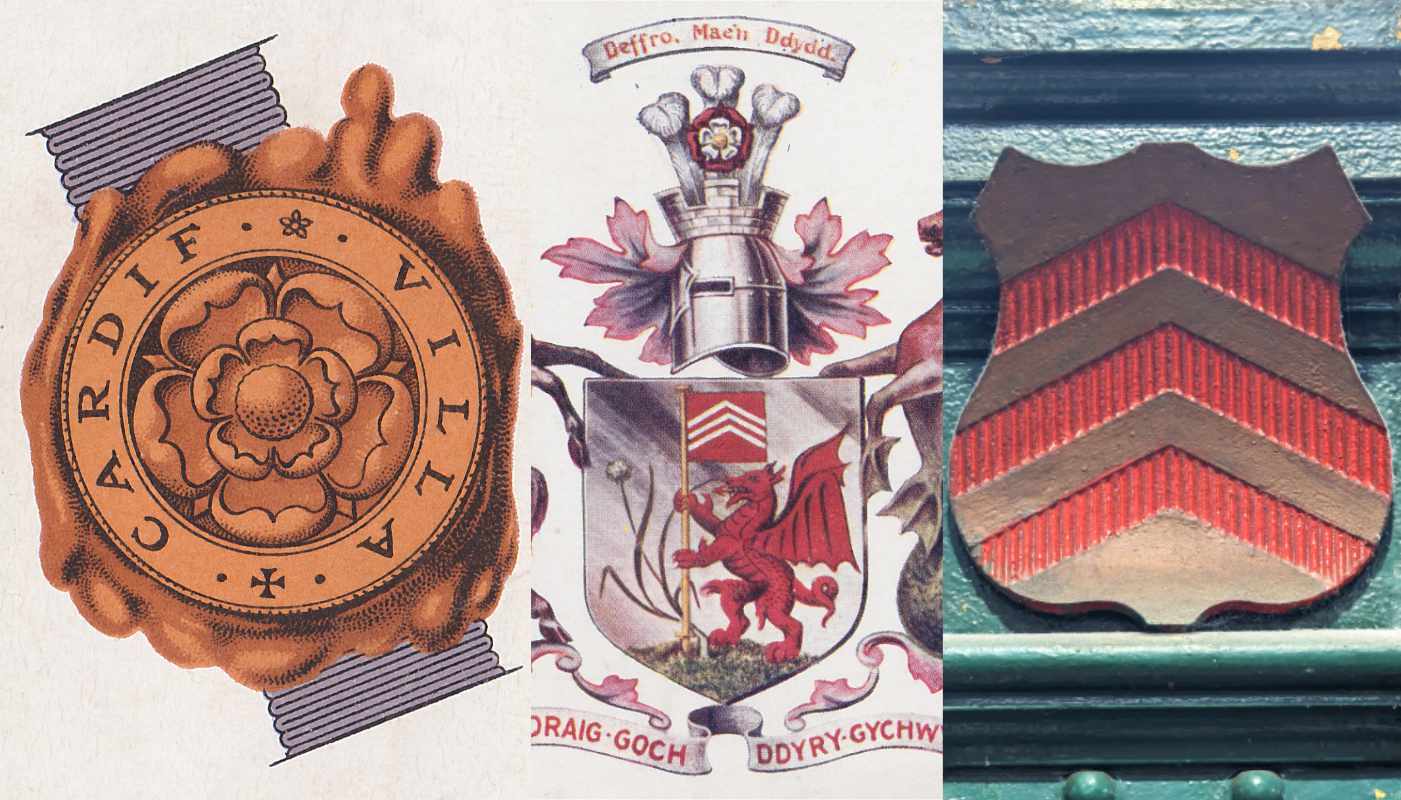
This series was inspired by an article from John&Jane that explored the design of a modern flag for Cardiff. In the first part I looked into the history of Cardiff and found some examples of the “Cardiff Arms”.
In the second part I discovered some of the history of the arms and shared more examples of their use.
Since then, I’ve been scouring my archive for more references and finding examples around Cardiff.
The “Cardiff Arms”

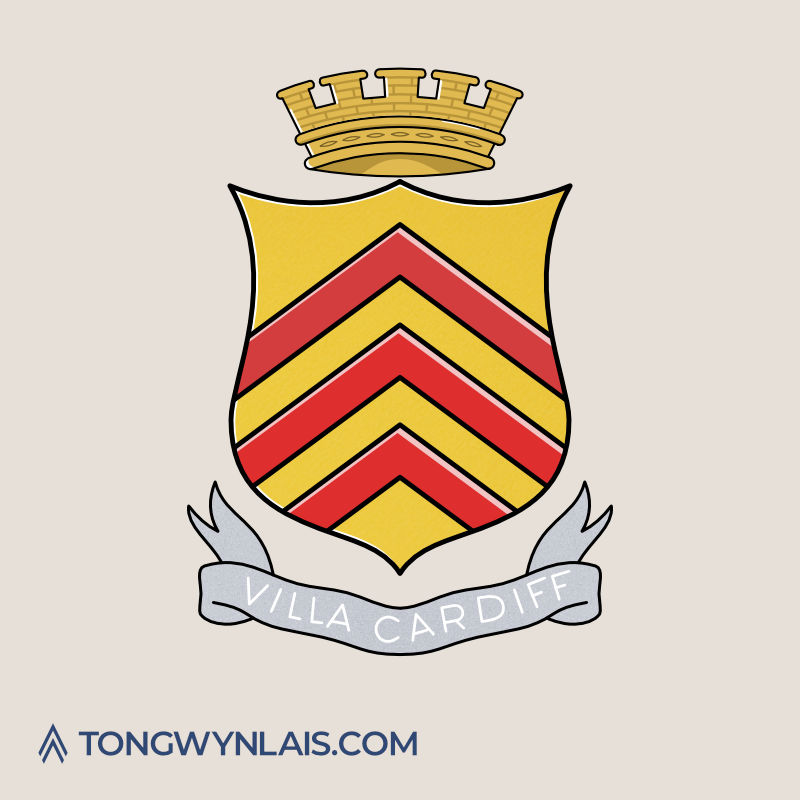
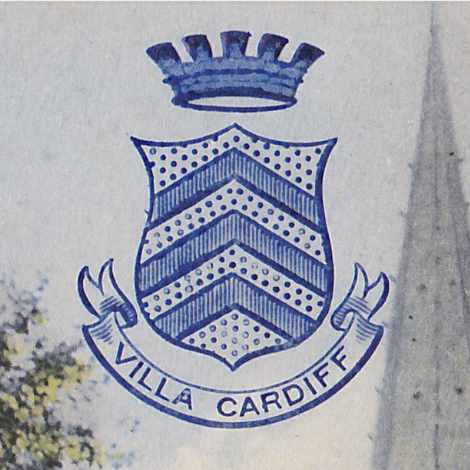
The Cardiff Arms is a coat of arms featuring a shield, mural crown and slogan, “Villa Cardiff”.
A mural crown represents city walls in heraldry with the number of towers often representing the size or importance of the town or city.
The “charge” on the shield features three chevrons and the slogan may represent Cardiff’s Roman origins. (The thinner chevrons are called chevronels in heraldry but I’ll keep referring to them as chevrons.)
I’ll refer to the coat of arms as the “Cardiff Arms” for the rest of this article.

The Tudor Rose
I was quite surprised when I came across this image after finding so many examples of the Cardiff Arms that include the text, “Villa Cardiff”. It’s an illustration of a wax seal with a flower design on a cigarette card from 1911.
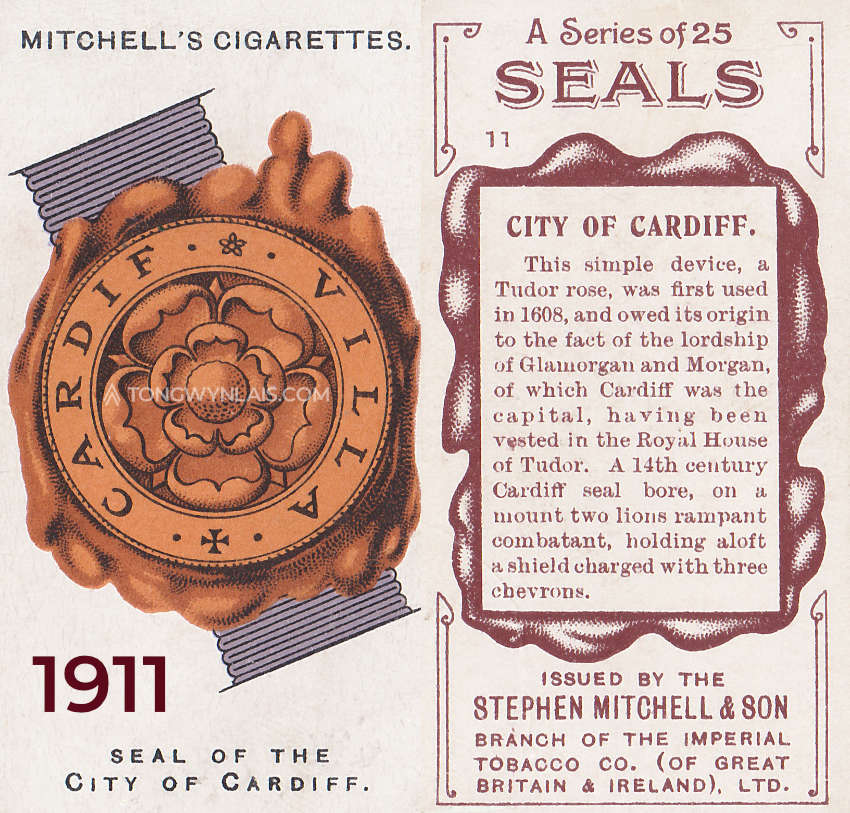
The text on the back of the card reads, “This simple device, a Tudor rose, was first used in 1608, and owed its origin to the fact of the lordship of Glamorgan and Morgan, of which Cardiff was the capital, having been vested in the Royal House of Tudor. A 14th century Cardiff seal bore, on a mount two lions rampant combatant, holding aloft a shield charged with three chevrons.”
I recently popped into the Museum of Cardiff and the seal is prominently displayed at the start of the exhibition. It was adopted in 1608 when Cardiff was granted the Royal charter by King James I.
Arms vs Seal
It’s worth noting that the Arms and Seal of a city were used for very different purposes, although they often had the same design. Arms represent the identity of a city and the seal represents its authority. Arms were used on flags and other presentational items. Seals were used for official legal reasons like laws and contracts.
The New City Arms
Cardiff was granted City status in 1905. We adopted the familiar coat of arms that you can see all around the city. This early version from a 1907 postcard doesn’t include the Royal Badge of Wales around the necks of the supporters. The Tudor rose from the seal is prominently featured in the crest of the new arms.

The sender of the postcard writes that Cardiff has been made a borough, when it had actually just been made a city.

I hope you will like the P.P.C. this is the new coat of arms, since Cardiff has been made a Borough.
The Capital of Wales
Cardiff became the capital of Wales 70 years ago this month. The Home Secretary, Gwilym Lloyd George, announced the decision on December 20, 1955.
Around Cardiff
City Hall
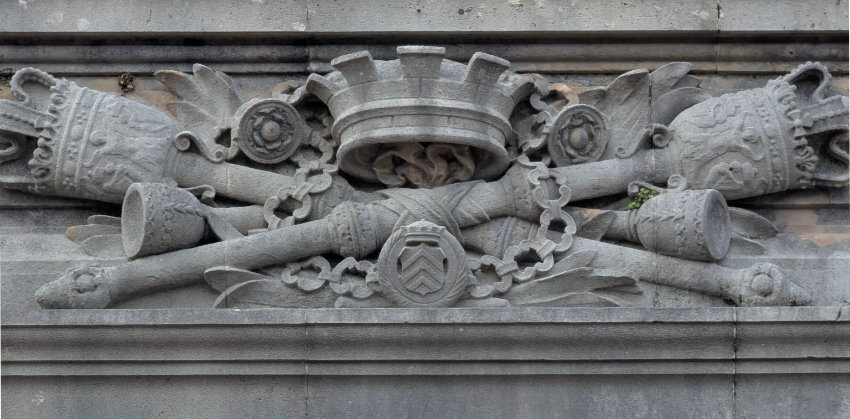
The entrance of City Hall has a few examples of the Cardiff Arms.

This stonework includes a pair of Tudor roses in addition to the Cardiff Arms.
Tiny Rebel and Cardiff Market
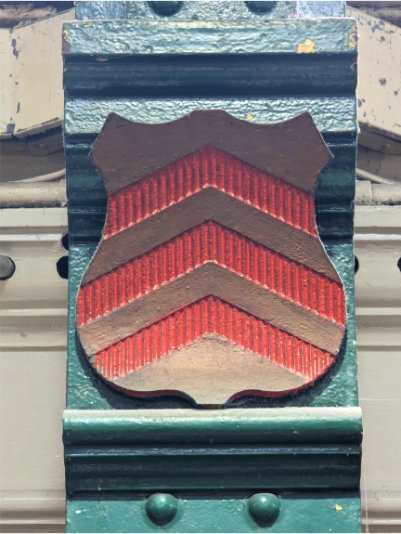
I’ve been wandering around Cardiff looking up at building for months and these two examples still escaped me until very recently.
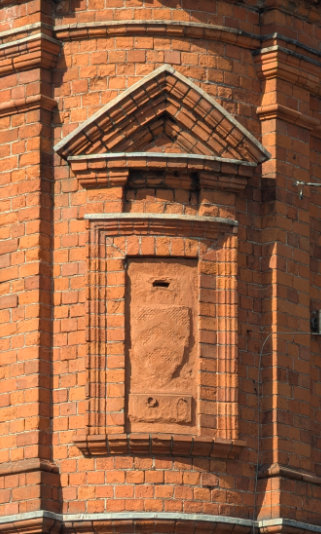
This faded example is on a building that used to be the County Council Club.
Cardiff Market uses the Cardiff Arms prominently in its branding and these shields are all around the upper level.
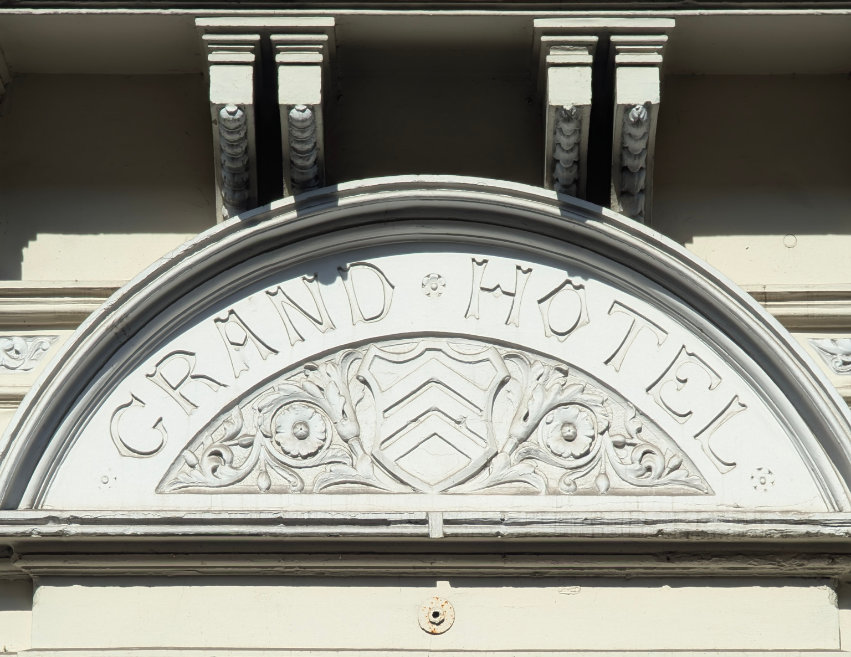
Grand Hotel, Westgate Street
The Grand Hotel was built in 1886 and the entrance is adorned by the Cardiff Arms. I thought at first the flowers were Tudor roses but on closer inspection, they aren’t.
Examples
I’ve been scouring the internet to find more examples of the Cardiff Arms from over the years.
1906
These images were featured in a newspaper article from 1906.
The shields bear the arms of the De Clare family, formerly Lords of Cardiff. The final seal, a Tudor Rose, is the common seal of the City of Cardiff that was first used in 1608.

1899
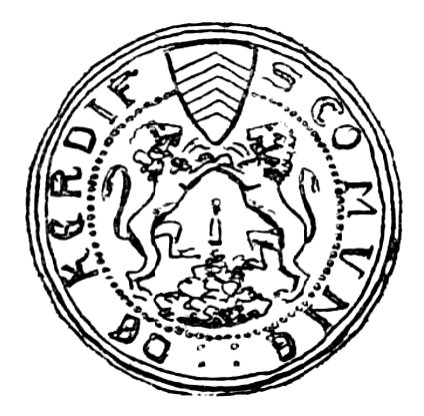
This image was featured in an article from 1899.
It’s the Cardiff Borough common seal from a document dated in the 14th century. It was used until the 17th century.
It’s a pyramidical mount (or cairn of stones) two lions rampant combatant, supporting aloft a shield of arms; three chevrons, and legend in ornamental letters – “S’ Comune De Kerdif”.
1887
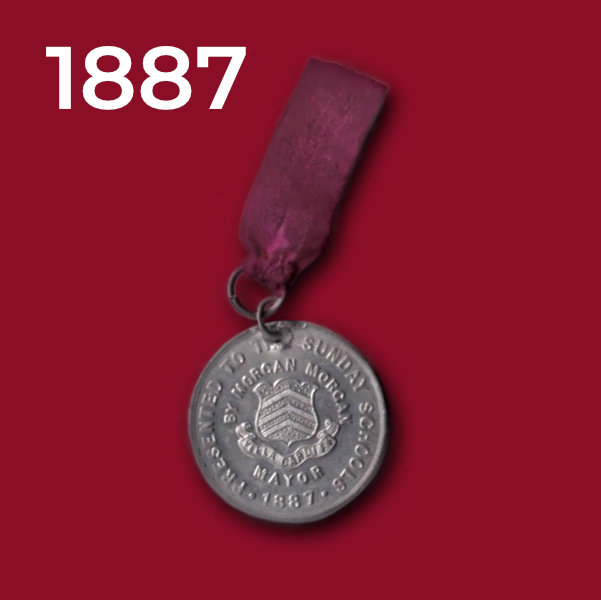
This medal was presented to Cardiff Sunday School pupils to commemorate Queen Victoria’s Golden Jubilee.
It was presented by Mayor Morgan Morgan.
1830
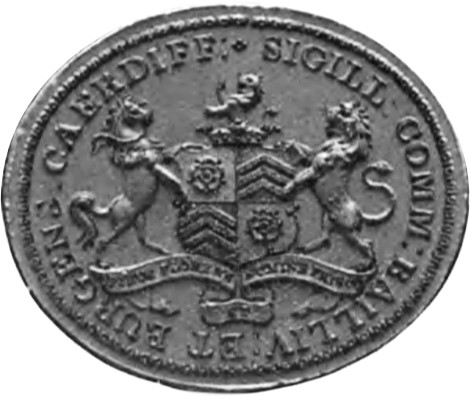
“Common Seal Of The Bailiffs And Burgesses Of Caerdiff”.
This image is from “Cardiff Records – Vol 1” (1898) by John Hobson Matthews, Archivist to the Corporation of Cardiff. It shows a quartered shield featuring the Tudor Rose and De Clare chevrons.
Part 5
I still have many more examples of the Cardiff Arms from my own collection to share.
If you want to make sure you don’t miss it, you can subscribe to the blog and follow me on Bluesky, Threads or Instagram.
If you have any information about the Cardiff Arms, I’d love to hear from you. Do you agree with Gareth Strange from John&Jane, would you like to see a modern flag for Cardiff?

So interesting ,great research work