


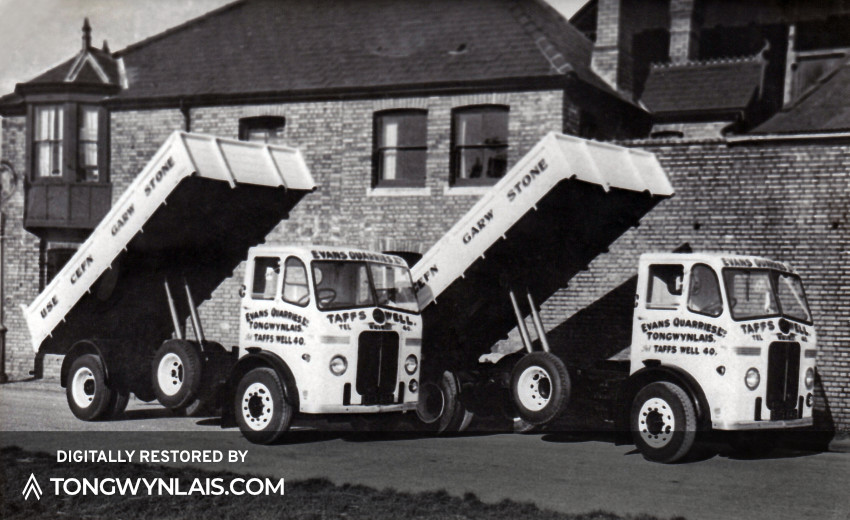
I picked up this photo of two vintage lorries belonging to “Evans Quarries Ltd” a few years ago. Underneath the company name it says, “Tongwynlais” and “Taffs Well 40”. The load beds also have the text, “Use Cefn Garw Stone” on the side so I had a few topics to research.
The vehicles are tippers and both have their load beds tilted upwards. They’re parked carefully next to each other with no drivers in the cabs. This makes me think it’s a promotional photo.
I’m making an assumption that Evans Quarries either owned or operated Cefn Garw quarry. If you know who the Evans family were or you know the business, I’d love to find out more information to share with everyone.
Leyland Octopus
I’m not a vintage lorry expert but I was determined to work out the make and model of the lorries. After some good old fashioned internet sleuthing I managed to discover the lorries are made by Leyland. The shape of the blurry text above the grill makes sense when you see the Leyland badge.
Do you remember seeing these lorries driving up and down through the village?

The model is an “Octopus” and it was an incredibly popular vehicle in the middle of the 20th century. Leyland made lots of variations from flatbeds to tankers and tippers. If you search on eBay there loads of toy versions from Corgi and Dinky.

The shape of the grill makes me think the lorries are from the late 1940s to early 1950s. These workhorses would have been designed to last so the photo could be later but they look in very good condition. I expect years of lugging stone from a quarry would’ve left plenty of dents and dings so I think this photo was taken to show off their new investment.
Taffs Well 40
I initially thought the lorries included Taffs Well because the business was based in both villages but I quickly realised that “Taffs Well 40” is their phone number. Now a quick history lesson for the youngsters…
From the introduction of the telephone, UK numbers were simply the telephone exchange name and the subscriber number. Exchange names were typically the physical location of telephone exchanges, either the name of an area, city, town or in this case, village.
The length of early numbers depended on the number of telephones attached to a particular exchange. Two-digit numbers were sufficient on small exchanges with fewer than 100. Hence, Taffs Well 40.
I’m hoping a reader will remember when the Taffs Well 40 number was replaced. My research suggests that named exchanges were still in use until the mid 1960s.
Cefn Garw Quarry
I’ve struggled to find much information about Cefn Garw quarry. It was worked in the 19th century before seemingly returning to nature and then redeveloped throughout the 20th century. Quarrying eventually stopped in 1987.
If you know anything about the quarry, please get in touch.
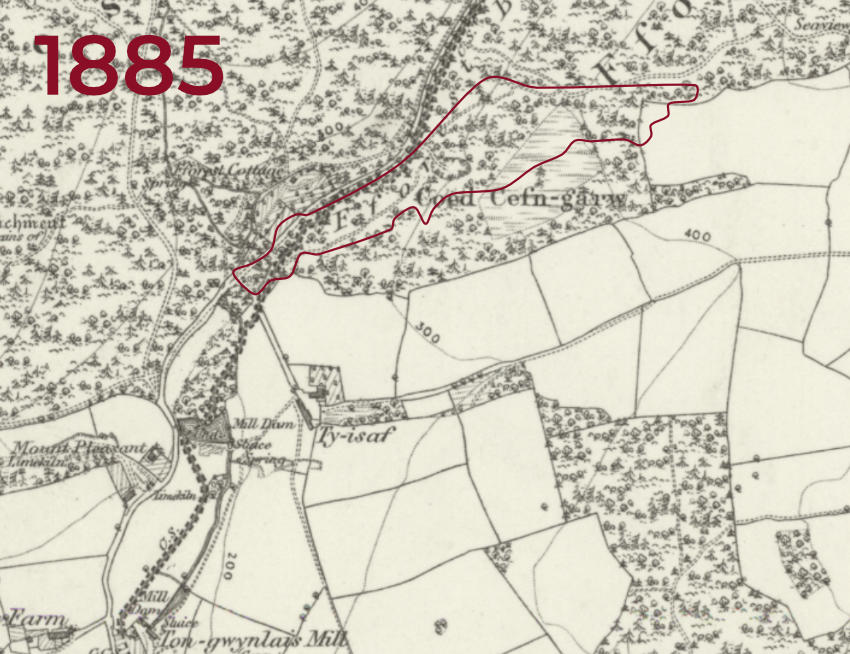
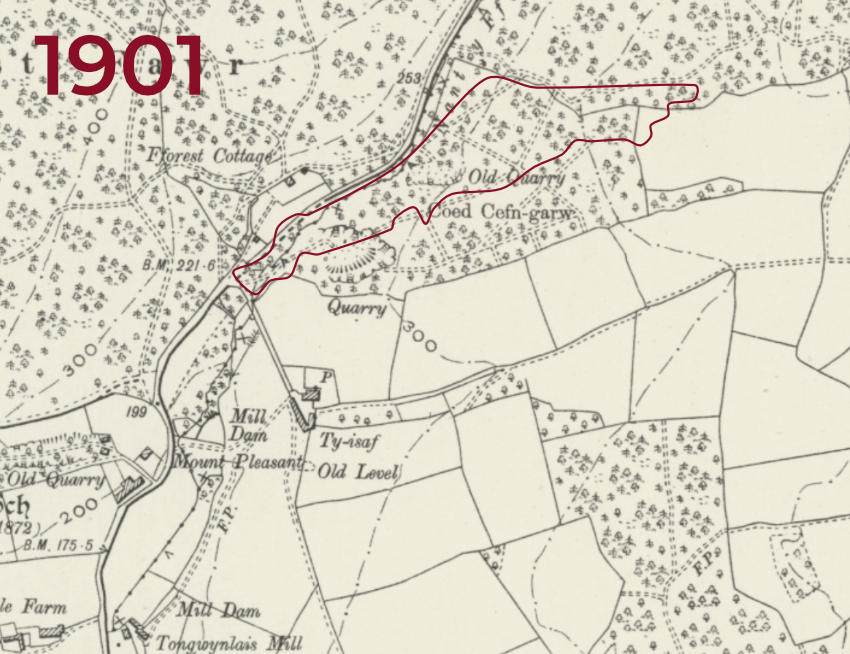
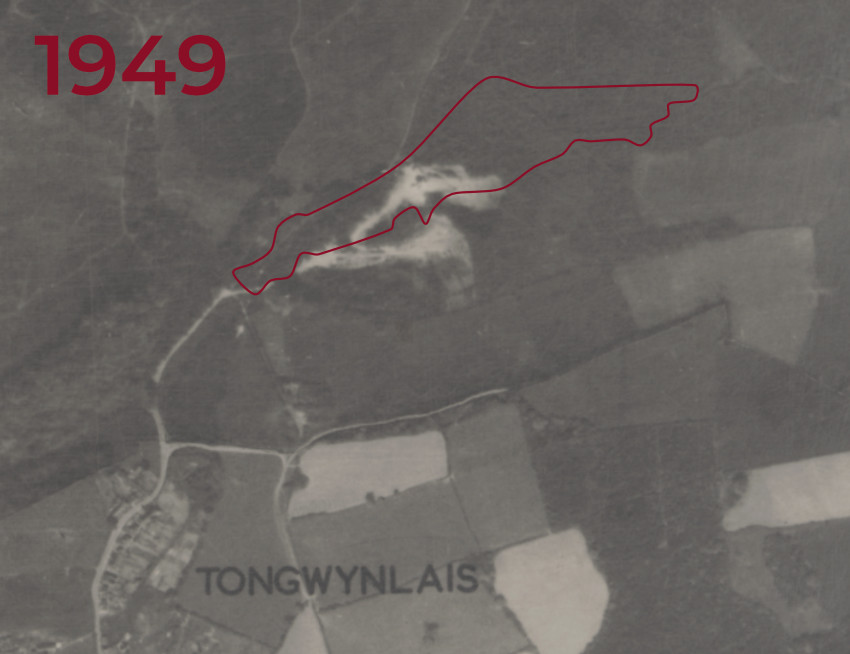
As usual, the amazing historic maps provided by the National Library of Scotland have helped to show the development of Cefn Garw quarry over time. I’ve added an outline of the current site in its disused state so show how each map compares.
The earliest map was printed in 1863 (it was surveyed from 1811 – 1814 and published in 1833) and shows the area of the site appears to be forest.

The forest, “Coed Cefn-garw” is marked in this 1885 map.
By 1901 the north east area is marked as “Old Quarry” and the south west “Quarry” suggesting work had restarted at the entrance of the site.
This 1949 aerial photo seems to show the quarrying has extended further into the site.
By 1964 you can clearly see the quarry is much bigger and extends to the north east. The work continued to the east over the next 20 years.

If I can find out more about the history of the quarry, I’ll do a follow-up article.
Sources
- All maps from National Library of Scotland
- “Asquith” Leyland Octopus from British Commercial Vehicle Museum
- Read more about Cardiff quarries on Dicmortimer’s Blog
