


This series was inspired by an article from John&Jane that explored the design of a modern flag for Cardiff. In the first part I looked into the history of Cardiff and found some examples of the “Cardiff Arms”.
Since then, I’ve been collecting even more examples and looking into the history of the design.
The “Cardiff Arms”

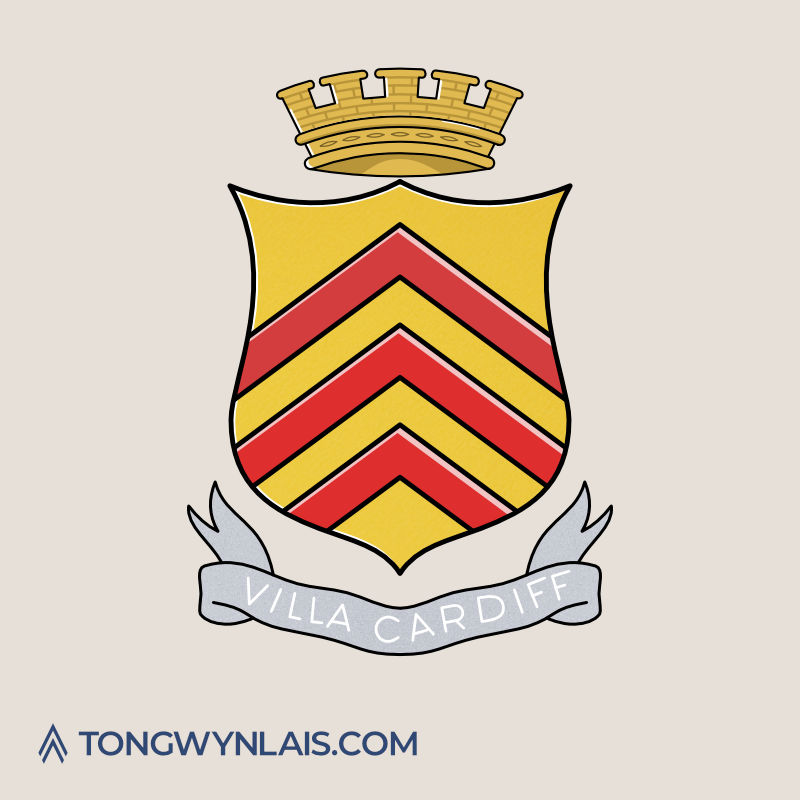
The Cardiff Arms is a coat of arms featuring a shield, mural crown and slogan, “Villa Cardiff”.
A mural crown represents city walls in heraldry with the number of towers often representing the size or importance of the town or city.
The “charge” on the shield features three chevrons and the slogan may represent Cardiff’s Roman origins. (The thinner chevrons are called chevronels in heraldry but I’ll keep referring to them as chevrons.)
I’ll refer to the coat of arms as the “Cardiff Arms” for the rest of this article.

Developing the Arms
The design of the Cardiff Arms was a topic of discussion for decades at the end of the 19th Century.
The Cardiff Times reported on 11 November 1871 that the Mayor suggested redesigning the arms.
“The proposal of the mayor to remodel the borough shield by adding to the insignia of the De Clare family the quarterings of the House of Stuart would fittingly and somewhat poetically link together the past and present ‘patrons’ of the ancient town of Cardiff.”
The Cardiff Times – 1871
On the same day, the Cardiff and Merthyr Guardian reported that there was a mistake in the original design of the arms. Earlier versions had gold chevrons on a red shield.
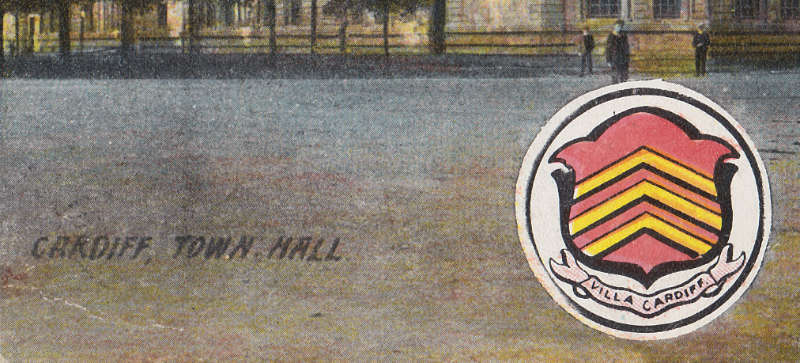
This design still exists in the stained glass windows of Cardiff City Hall today.
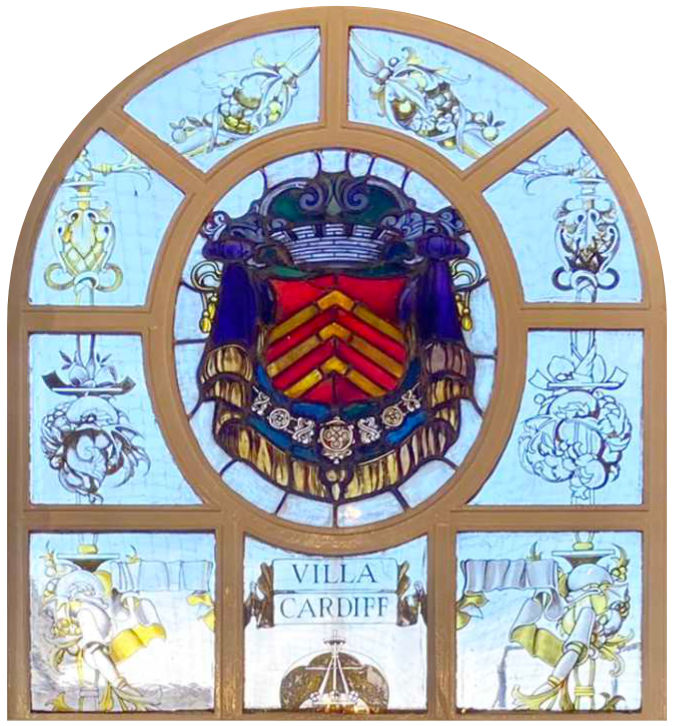
This was based on incorrect information provided to Berry’s Encyclopedia of Heraldry by the father of one of Cardiff’s aldermen.
“We therefore recommend that the Borough Arms be borne ‘Or Chevrons Gules,’ and the present anomaly of the Arms appearing in different forms, in the Town Hall and the mayor’s badge, be corrected.”
Cardiff and Merthyr Guardian – 1871
The Weekly Mail reported on 20th May 1893 that it was Lord Bute’s idea to add the mural crown to the Cardiff Arms. The 3rd Marquess of Bute was Mayor in 1890.
“The right to use the mural crown is believed to be derived from the fact that Cardiff was formerly a fortified place.”
The Weekly Mail – 1893
In “The Book of Public Arms” by Arthur Charles Fox-Davies (1894), the design of the arms is also mentioned. It notes that, “On some of the Corporation notepaper the tinctures are reversed”. The author also describes examples where people created their own versions of the design.
The Editor has seen the arms used with the addition of two dragons as supporters and a leek as a crest, but it was only a Cardiff tradesman’s usage, and was probably the outcome of his imagination rather than of any more authentic source.
The Book of Public Arms – 1894
Examples
I’ve been scouring the internet to find more examples of the Cardiff Arms from over the years.

1902
This medal from 1902 marks the coronation of King Edward VII.
The medal is dated 26th June 1902 but the coronation actually took place in August. The King had been taken ill and required surgery so the coronation was postponed.
The Mayor of Cardiff at the time was Frank John Beavan.
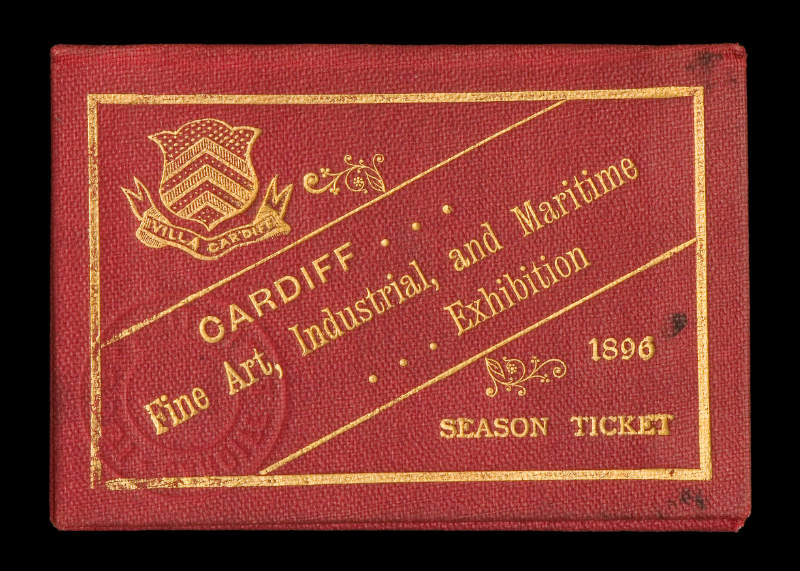
The Cardiff Fine Art, Industrial, and Maritime Exhibition took place over 6 months in 1896. The Cardiff Arms were used in the promotion of the event and can be seen prominently on the exhibition building.
“The movement to hold an exhibition of arts and industry began with the Free Library Committee of the Borough of Cardiff. A general committee of public figures, businessmen and industrialists was formed who were keen to promote the local resources and industries of Cardiff. The Marquis of Bute permitted the use of Cathays Park as the site of the exhibition. Local architect Edwin Seward designed the main exhibition building which contained exhibits ranging from machinery to fine art. The exhibition grounds included a canal and lake for maritime exhibits, models of a working dairy, a biscuit factory and Shakespeare’s house. The event proved a spectacular extravaganza, with art exhibitions, concerts, outdoor shows and an exotic Indian bazaar. During the six months the exhibition lasted, one million people visited.”
1896
“Taff Vale Railway locomotive ‘175’ used on the occasion of H.R.H. Price of Wales’ visit to the Cardiff Fine Art, Industrial and Maritime Exhibition building.”
Source – Amgueddfa Cymru – Museum Wales

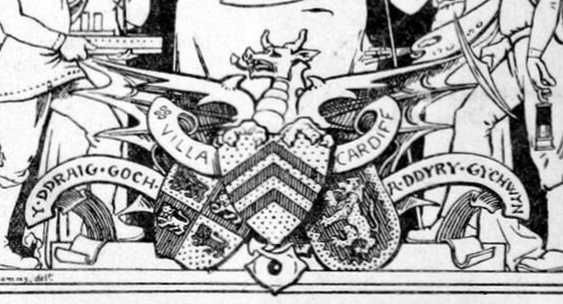
1896
A poster advertising the exhibition used the Cardiff Arms below a Welsh dragon.
1896
The season ticket features the Cardiff Arms on the cover.
Source – Amgueddfa Cymru – Museum Wales

1888
The “Cardiff International Exhibition” of 1888 appears to be a precursor to the later exhibition.
It lasted for 2 months and featured many of the same exhibits.
The medal features the Arms of the Marquess of Bute and the Cardiff Arms.
Source – Amgueddfa Cymru – Museum Wales
1854
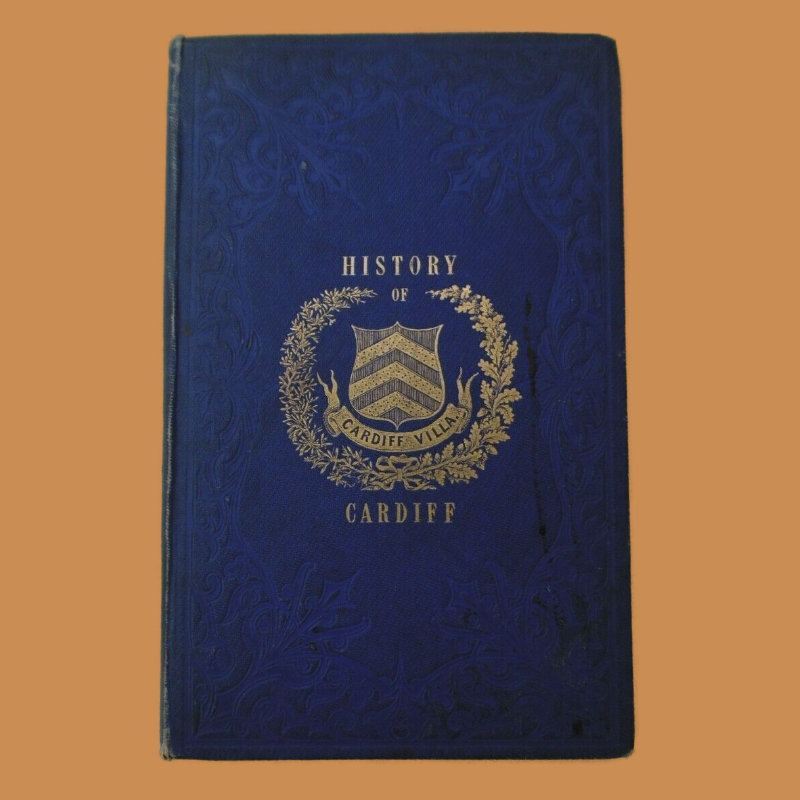
“A History of the Town and Castle of Cardiff” by William Lemuel Jenkins was published in 1854 and features the Cardiff Arms on its cover.
This is the only example I’ve found where the slogan is reversed.
1684
Henry Somerset, 1st Duke of Beaufort (1629 – 1700), toured Wales in 1684.
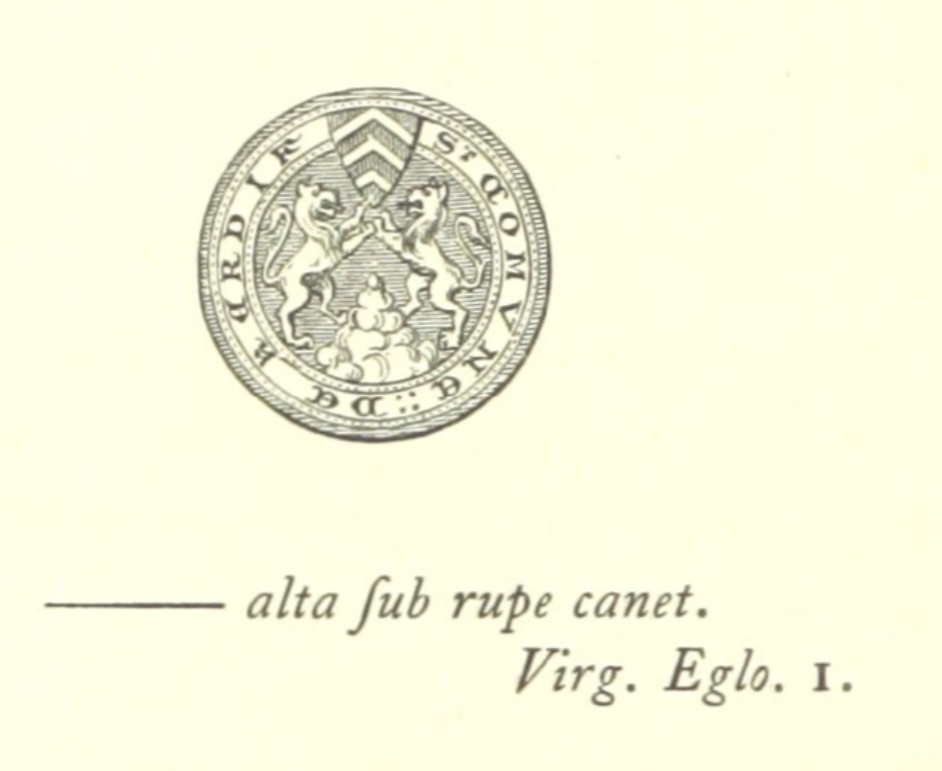
“The Account of the Official Progress of His Grace Henry, the First Duke of Beaufort through Wales in 1684.” features this drawing.
The “Common Seale of Cardiff” is circumscribed with the text, “S. COMUNE DE KERDIF”. (“S” being short for Sigillum, or “seal”.)
The shape, colour and elements included in the arms have changed over the years but the core design has remained the same.
The seal featured in the Duke of Beaufort’s book shows that Cardiff has been using the three chevrons for hundreds of years.
Part 3
I have many more examples of the Cardiff Arms from my own collection to share.
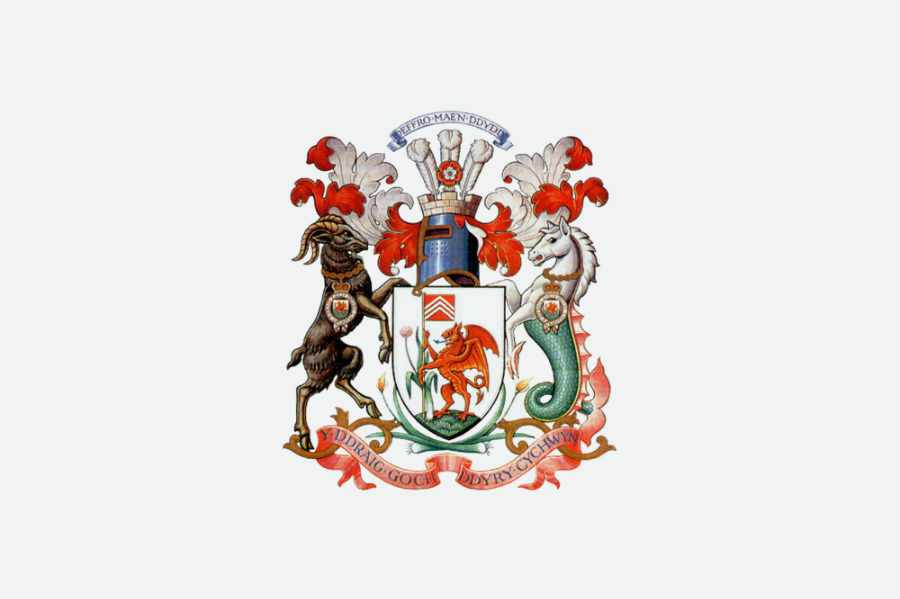
In part 3 I’m going to investigate the modern coat of arms that were granted in 1906.
If you want to make sure you don’t miss it, you can subscribe to the blog and follow me on Bluesky, Threads or Instagram.
If you have any information about the Cardiff Arms, I’d love to hear from you. Do you agree with Gareth Strange from John&Jane, would you like to see a modern flag for Cardiff?

Jack Interesting read please keep it coming. I’d be particularly interested in getting the exact colours and any understanding of whether this symbol links back to Roman times even and before such as ‘Silure’ tribe even. I’ve got a piece of material that I bought recently at the National Wool Museum in West Wales and they are worth a shot, as they have access to records and research that we don’t. This symbol is also used by Glamorgan Archers. John