

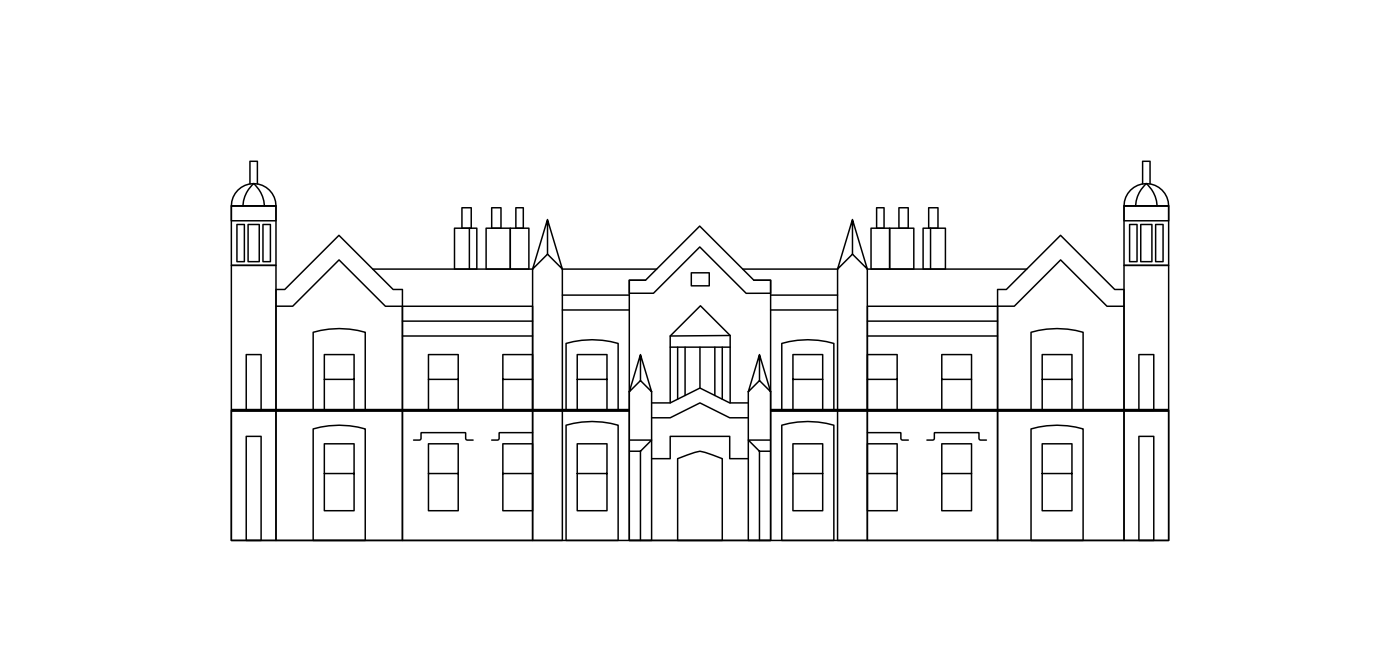
Roger L Brown published “The Lewis’ of Greenmeadow” in 1984. He was the vicar of St Michael’s Church from 1979 to 1993 and a keen historian.
I wrote about his previous book, “Turn of the Century Ton“, earlier in the year.
Roger purchased a second hand lithographic printer to produce various books and pamphlets. They were sold through members of the church and in local shops. He retired and moved away from the area but still remembers his time here with much affection.
The Lewis’ of Greenmeadow gives a brief history of the ancient Lewis family from the 1500s, explains how the Greenmeadow Estate became home to Wyndham Lewis MP, describes the various owners and finally, the reasons why the house fell into ruin.
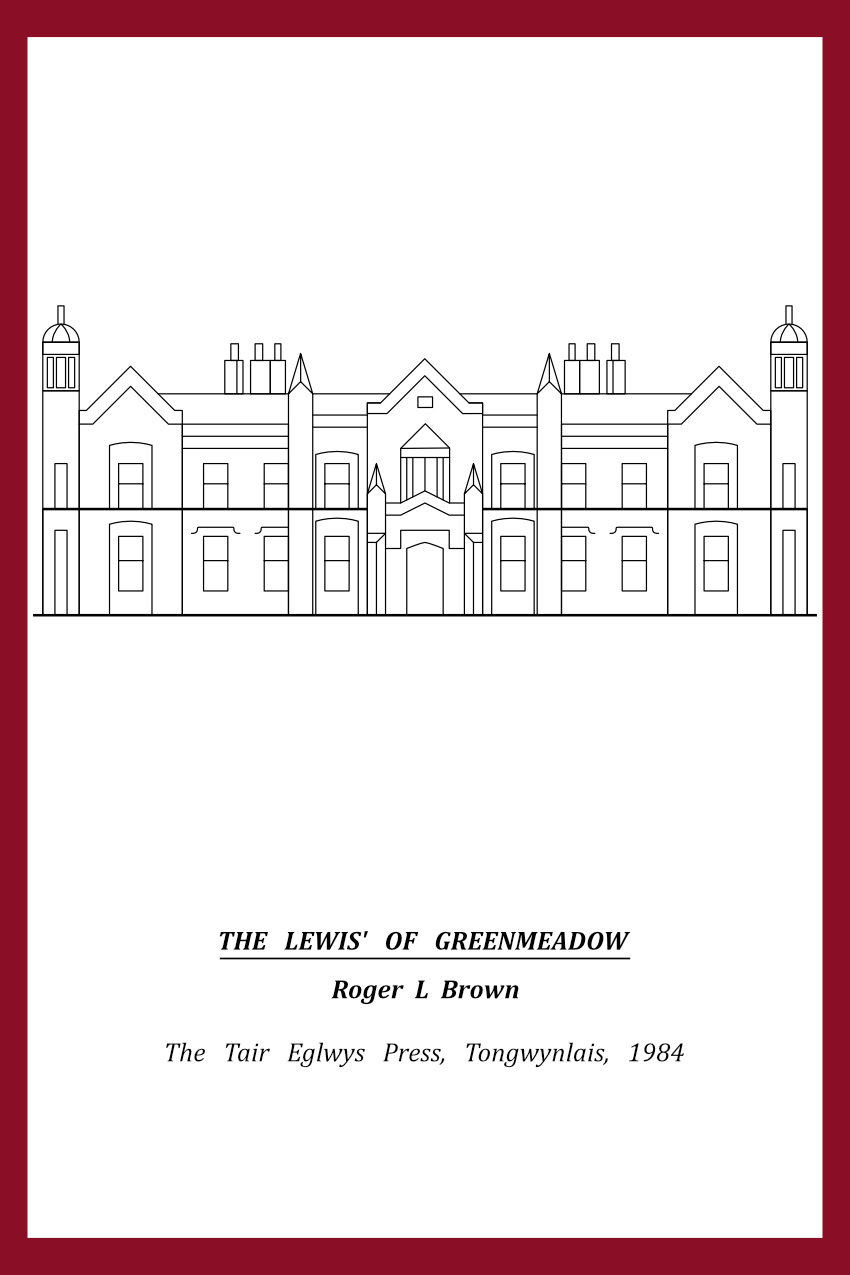
Contents
- The Lewis Family Tree
- Preface, by Sir Cennydd Traherne, K.G.
- Introduction
- Chapter 1: The Lewis family
- Chapter 2: Mr & Mrs Wyndham Lewis
- Chapter 3: Enter Mr Disraeli
- Chapter 4: The Lewis’ of Greenmeadow
- Chapter 5: Greenmeadow House
- Bibliography
Sir Cennydd Traherne, K.G.
Sir Cennydd Traherne was a Welsh landowner who served as Lord Lieutenant of Glamorgan from 1952 to 1974 and was made a Knight Companion of the Garter in 1970. He was also the Lord Lieutenant of South, Mid and West Glamorgan from 1974 to 1985.
Greenmeadow in 1799
The book includes a section of Yates’ map of Glamorgan from 1799. Greenmeadow was owned by the Price family at this time and leased by William Lewis, the 4th son of Thomas Lewis.

Wyndham Lewis & Mary Price
Wyndham Lewis (1735 – 1781) was the 3rd son of Thomas Lewis and married Mary Price. Her family owned many properties in the parish of Whitchurch, including a farmhouse known as Pantgwynlais, which was eventually converted into a mansion and called Greenmeadow House.
Mary’s brother, Colonel John Price, left most of his family’s estate to Mary and Wyndham’s fourth son, also called Wyndham, and later to become Wyndham Lewis MP.
Wyndham Lewis MP & Mary Anne Evans
Wyndham Lewis MP (1779 – 1838) and Mary Anne Evans (1792 – 1872) are the most famous residents of Greenmeadow. He inherited the Greenmeadow Estate when his uncle, Colonel John Price passed away.
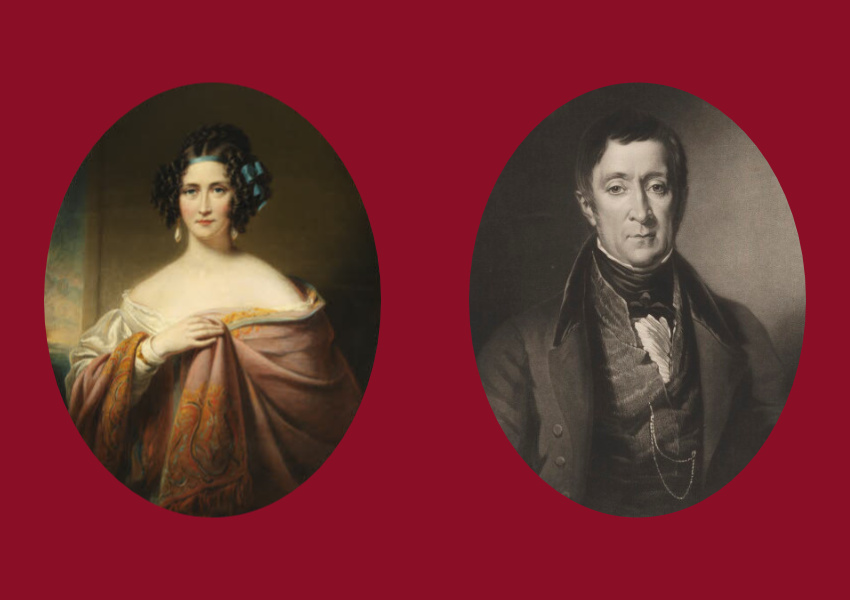
Wyndham was a trained solicitor and barrister but never practised as one. He was a partner in the Dowlais Iron Company with John Josiah Guest. The pair also founded a bank and Wyndham had other interests in local industries.
Roger remarks that his portrait gives the impression of a “serious but kindly man”.
Mary Anne grew up in Devon, her father John was a lieutenant in the Navy and her mother, Eleanor Viney, was the daughter of a clergyman.
In contrast to her husband, Mary is described as exuberant and sociable. Roger explains that she loved entertaining and she was responsible for converting the old farmhouse into a gothic mansion.
The book goes into more detail about the couple’s life at Greenmeadow, Wyndham’s entry into politics and Mary’s life after her husband’s death.
Mary Anne married the British statesman Benjamin Disraeli in 1839. Roger dedicates a whole chapter to their relationship but it’s well documented online so I won’t include it all here.
Greenmeadow House

This photo is from a collection I purchased many years ago. I’ve edited it to remove blemishes and show more of the detail. The house looks like its in good condition with tended hedges and planters on the drive.
I wrote an article about Greenmeadow House back in 2020, it includes some more images, a fascinating old map of the estate and I’ve shown where it was located in the village.
Henry Lewis I & Mary Emerson
Henry Lewis I (1774 – 1838) died in the same year as his brother Wyndham so his widow, Mary, moved into Greenmeadow with their son. Her gravestone records that she died there in 1841.
Roger writes that Henry, “preferred a life of adventure to one of business”. He became an officer in the army and was decorated with a medal for the Battle of Alexandria in 1801.
Henry and Mary’s daughter Ann married George Thomas Clark, the antiquarian who surveyed Castell Coch in 1850.
Henry Lewis II
Henry Lewis II (1815 – 1881) inherited the estate from his father and moved into Greenmeadow House with his mother around 1838-1839.
Henry Lewis II was married twice, firstly to Ann Morgan then to Sophia Gwyn. He lost his sight in a shooting accident shortly after his second marriage. Sophia and Henry had five children.
He was a keen equestrian and built new stables at Greenmeadow. His horse, Little Charley, won the Grand National in 1858.
Roger’s research shows Henry was a kind man who loved practical jokes and regularly visited every cottage in the neighbourhood. He finishes by writing about Henry’s death in 1881, ” It was said that all business was suspended at Tongwynlais that day as hundreds of spectators lined the road; houses had their blinds drawn and one hundred tenants followed his coffin from Greenmeadow.”
Colonel Henry Lewis & Rose Mabel Lewis
Colonel Henry Lewis (1848 – 1925) & Rose Mabel Lewis, (Lewis Armytage) (1853-1928) would’ve been remembered by some older readers of this book when it was published.
A newspaper cutting of the 1920s described him as “a typical country squire, a country gentleman of the old school. Handsome in his old age, he must have been a strikingly attractive figure in the days of his prime.”
Colonel Henry was a county councillor, alderman, magistrate and member of several sporting and local government organisations. He was a colonel of the First Devon Imperial Yeomanry from 1902 to 1908.
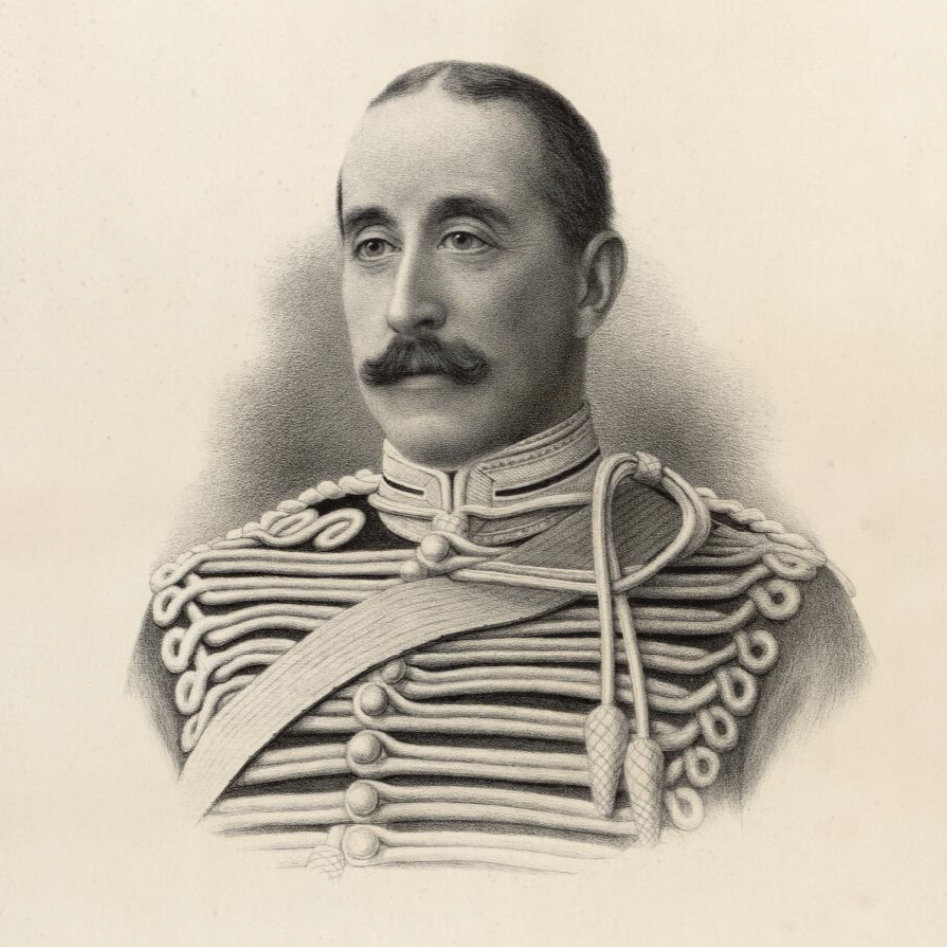
He enjoyed the typical country pursuits and the couple travelled widely, collecting souvenirs to fill their home.
Rose Lewis published books under the pseudonym “Lewis Armytage”. Her work includes:
- The Blue Mountains (London, 1890)
- A Charade (Cardiff, 1891)
- Spindle and Shears: A Welsh Story (London, 1891)
- Poems (Greenmeadow, 1917)
Roger includes a description of Tongwynlais by Mrs Lewis.
The village consisted of one long street, but spread by alleys and by-ways towards the vineyard on the right, lying on the sunny slope below the Castle, and by the left of the canal, where the heavily laden barges plied daily from the quarries, with stone that was destined to pave the fast growing town of Cardiff. A school house stood in the outskirts of the village, and on the opposite side of the road was a spring known in the district as the ‘spout’, which discharged its waters through an iron shoot into a stone trough below. Here morning and evening the women and children brought bright hued Nantgarw pitchers to be filled, and after school hours the lane was full of the chatter of young voices and the clatter of young feet, as they chased one another on the stony road, shouting and whistling, ‘as only boyhood can’. Here too the tired horses often came to drink, and the cows were driven down to shake their thirst at its waters.
Captain Harry Lewis
Captain Harry Lewis (1880 – 1956) served as a lieutenant in the Lancers during the South African War and as a captain during the First World War.
He presided over the decline of the estate as financial pressures made it impossible to maintain.
Harry attempted to farm part of the estate himself but nothing came of it.
The Greenmeadow Estate, consisting of 262 acres, was eventually put up for auction. The sale included:
- The mansion itself
- Ty Isaf farm of 72 acres
- Tongwynlais mill with 10 acres, the house, and the old mill, which still possessed its waterwheel and machinery
- The old and the new kennels at the same place, the latter with a dog run
- A limestone quarry, leased to one Mr William E Lewis at a dead cent of £30 per annum
- Pear Tree Cottage, with the Greenmeadow House laundry alongside and the ground rents of the Smithy parts of Mill Road (Numbers 5-7 and 13 dating from a lease of 1832)
- Houses in Wellington Road dating from the 1860s and Wyndham Street from the 1850s.
The End of Greenmeadow
Roger concludes by saying, “The house was abandoned, fell into ruin, and after a tragic accident, was demolished in 1945, when Cardiff Rural District Council purchased the bulk of the Greenmeadow House grounds and built on it the present Greenmeadow Estate.”
It is perhaps salutary to realise that the Lewis family of Greenmeadow actually lived there for just over one hundred years.
There’s much more information in the book than I’ve managed to include here but hopefully this gives you an idea of who the Lewis family were and how they lived in Greenmeadow over the years.
Sources
- The Lewis’ of Greenmeadow – Roger L Brown
- Yates’ map of Glamorgan – People’s Collection Wales
- Wyndham Lewis © National Portrait Gallery, London
- Mary Anne Evans © National Trust Images
- The National Library of Wales

I’ve thoroughly enjoyed reading all this and find it so interesting and knowing the history of GreenMeadow mansion and its surrounds absolutely brilliant. Ive often wonder what our village would be like if the Mansion had survived! Obviously there would t be the GreenMeadow Housing Estate. I remember as a young child going to play at “The Stables” and also in the Orchard which is still on the GreenMeadow Housing Estate.
Sadly my parents neighbours Son was killed at the Stables which resulted in the demolition of what was remaining of the buildings. Ive heard of the “Spout” many times over the years and the canals were still around when I was a child, we used to fish for tiddlers and had so many happy times back in the day. Oh memories!
I too remember playing in the old stables and sadly can remember the day of the tragic accident that resulted in the death of a young boy who was a friend of mine. It was my first experience of the death of a friend.
I lived in GreenMeadow Drive until I was 25 when I left to pursue a new career. I still visit the Ton once a year and always walk around the village rekindling old memories.
Despite 50 years elapsing since I left I still have fond memories of the village. As the old saying goes ‘ you can take a boy out of the Ton but you cannot take the Ton out of the boy’
So interesting- thank you!