


I have a few postcards that feature a view of Castell Coch by photographer Martin John Ridley (1861-1936). This example was written in 1917 but not posted. The original photo is thought to be from 1905.
I have another postcard using this image that was sent in 1908.
The postcard is titled, “Castle Coch, Taffs Well”, which is very common around this time. The reference “M. J. R. B. 6045” stands for Martin John Ridley, Boscombe/Bournemouth.
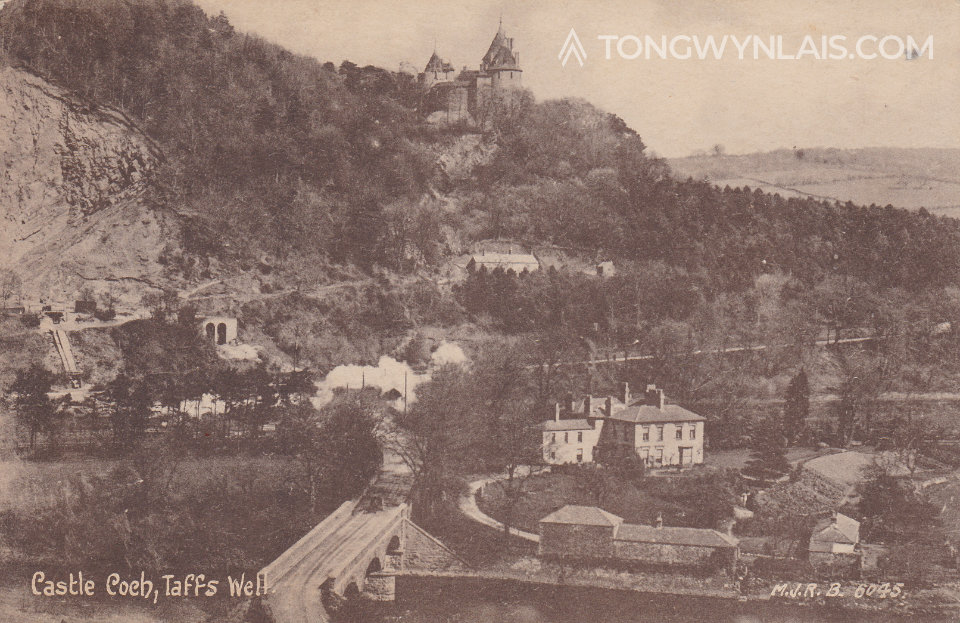
Bien à vous
The message on the card is very sweet.
“Taffs Well is a very pretty little village not very far from here. We often go to pick blackberries there in the summer and have very jolly times! Bien à vous”
Dorothy, May 3 1917
Dorothy isn’t a French name so presumably she was writing to a French friend.

Martin John Ridley
Martin Ridley was born in Reading in 1861. After getting married and starting a family, they moved to Bournemouth where he set up a photographic and printing business.
Ridley specialised in landscape and architectural photography and eventually set up a postcard business.
After his death, Martin’s daughter Winifred was in possession of over 6,000 glass plate negatives. They were going to be disposed of but thankfully the collection was saved. The Welsh section, consisting of 841 images, was purchased by The National Library of Wales sometime after 2007.
Ridley 1319
The original photo is stored in the National Library of Wales archive. This high resolution version shows a lot more detail and is a beautiful view of the castle and local area.
It was taken using the glass dry plate technique. This process uses a sheet of glass coated with a light-sensitive gelatine emulsion that’s allowed to dry before exposure. The plate is loaded into a large format camera, exposed to light, and then developed in a darkroom.
I’ve cleaned up the image by removing dust and blemishes that shows off the photo to its best.

In Detail
I’ve created a series of close up views to show the amazing details in the photo. I’ve cleaned up these images as well.
Castell Coch Cottages
A row of cottages sat under Castell Coch until they were demolished in 1969 to make way for the A470. I have another postcard that shows the cottages at a similar time.

The Quarry
Maps from time show a large quarry to the west of Castell Coch. This section of the image shows some buildings and carts that were used in the quarry.

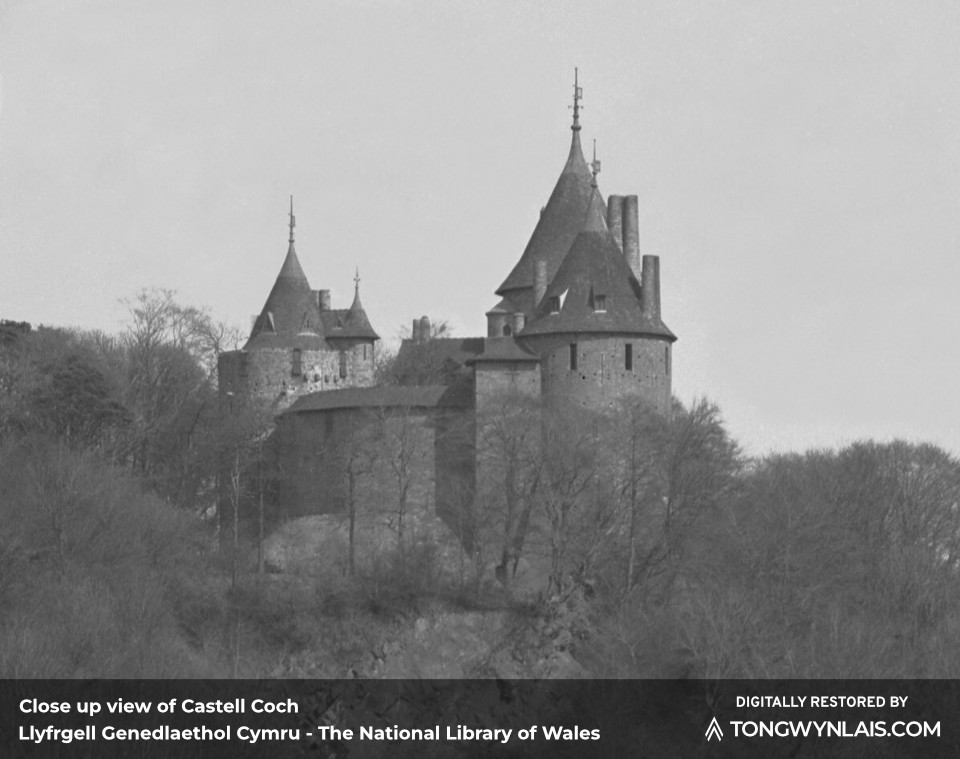
Castell Coch
This is a brilliantly clear view of the castle looking from the west. The trees obscure this view as they’ve grown over time.
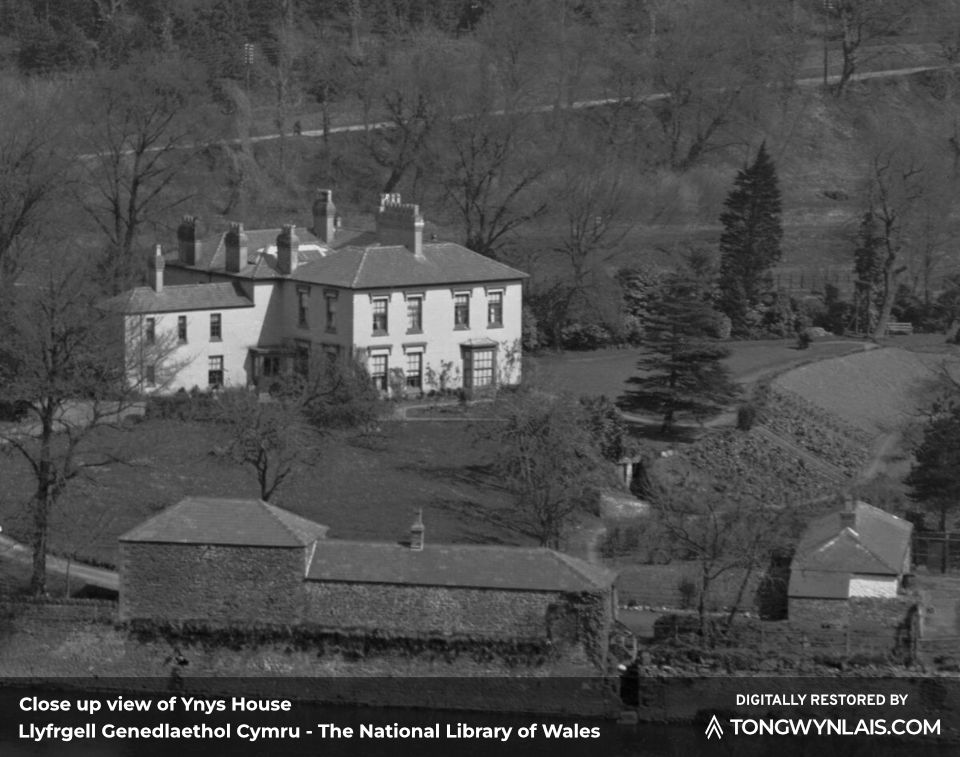
Ynys House
Ynys House is a 19th Century replacement of a 13th Century farmhouse.
Ynys Bridge
Ynys Bridge was built in 1808 and is Grade II listed. Thanks to the high resolution image, we can clearly see a horse and cart crossing the bridge.
There’s another view of Ynys Bridge in this postcard from 1939.

Sources
- 1917 postcard from my own collection
- Castle Coch, Taffs Well [ca.1905] from Llyfrgell Genedlaethol Cymru – The National Library of Wales
- Biography of Martin Ridley from Alwyn Ladell

Your insight into local history is clearly developing all the time – It is fascinating to reflect on the changes in a village like Tongwynlais in the last 200+ years. Layers and layers of social development overlaying the specific geography of a location – that mix between physical geography – the river and forest, the narrowness of the valley – and social geography – houses, castles, industries and religions which have come and gone even in this short period are all well documented in your blog, which makes it so fascinating.